
“We are all mourning a great loss,” McCall said, “but even in our sadness, our union is strong, thanks in large part to Tom’s leadership and vision. Now, we’ll move forward the only way we can: together. Together, we’ll honor Tom’s legacy, as together, we fight for justice and fairness for working families.” McCall served as USW international vice president of administration since July 2019. In that role, he bargained contracts with some of the union’s largest employers in steel, aluminum, rubber and other industries. Before his election as vice president, he served for 21 years as the director of USW District 1, a job in which he represented 70,000 USW members and retirees throughout the state of Ohio and bargained some of the union’s biggest contracts. McCall began his career as a union activist with USW Local 6787 at the Burns Harbor integrated steel facility in Northwest Indiana. There, he worked as a millwright and served the local union in various positions, including grievance chairman and vice president. During his tenure with Local 6787, McCall established the local union’s food bank and unemployment support committee. He joined the USW international staff in 1986. McCall’s leadership during the American steel crisis from 1998 to 2002 helped to restore benefits to tens of thousands of retired steelworkers. During the global economic recession in 2008 and 2009, he fought to save thousands of jobs with a focus on long-term viability and sustainability. “Our union is changing,” said McCall. “We’re organizing new members in new industries in both the United States and Canada, even as we bargain cutting-edge agreements for members in our traditional sectors. I am humbled to lead our union as we continue to fight for a better future for all working people. |
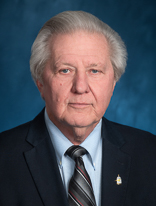 Our International Executive Board has appointed
 USW Praises Biden for Saving Pensions
The United Steelworkers (USW) today praised President Joe Biden for saving multiemployer pension plans covering more than a million Americans, including tens of thousands of USW members and retirees who dedicated their lives to the paper industry and other manufacturers.
The latest round of pension support delivered by President Biden’s American Rescue Plan will provide $1.3 billion to the PACE Industry Union-Management Pension Fund (PIUMPF) and $887 million to the National Integrated Group Pension Plan (NIGPP), averting the insolvency of both funds.
“USW members and retirees are deeply grateful to President Biden for stepping forward to save their hard-earned retirements,” USW International President Tom Conway said.
“His American Rescue Plan, enacted without the support of a single Republican in Congress, stabilizes dozens of pension funds that are hurtling toward insolvency because of Wall Street recklessness, corporate bankruptcies, industry consolidation and other factors over which workers and retirees have no control.
“Without President Biden’s support, many of these workers and retirees would have lost the bulk of their retirement income and spent their golden years scraping by.”
USW activists spent many years advocating for legislation to save troubled multiemployer funds.
“But only President Biden stepped forward to get the job done,” USW International Secretary-Treasurer John Shinn said. “He continues to show that he is the most pro-worker president in American history.”
PIUMPF covers more than 64,500 participants from the pulp and paper sector, while NIGPP has more than 48,000 participants from numerous industries. Both funds faced bankruptcy in 2034.
“After decades on the job, workers deserve secure retirements,” said USW International Vice President Luis Mendoza, who oversees the union’s paper sector. “President Biden understands this. He saw the threat that these workers and retirees faced and gave them back their futures.”
